Here we'll tell the stories behind the first steps for building the community around the management system fo PGSs.
Jovana Moschen
Our process of engagement with the Brazilian Forum of Participatory Guarantee Systems began through Rede Ecovida, the largest PGS in Brazil, with strong representation in the Forum's decisions and contributions.
Rede Ecovida built Speco together with Tekoporã, based on political principles of digital sovereignty aligned with the principles of agroecology. We believe this path can, and should, be shared with other PGSs in Brazil and around the world. From the very beginning of this process, the Speco system was designed and built to be shared.
In this project alongside the pilot community of Float, we first talked with Rede Ecovida to understand how we could access the other SPGs and learn how they work. Each PGS has its own way of operating, some are larger, other smaller, and these exchanges are essential for us to be able to customize Speco for each PGS. This would also create the seedbed for us to begin building the community.
Since 2024, Rede Ecovida has been talking with CONAB (the National Supply Company) about that agency's need to survey data on the country's organic production. In 2025, Rede Ecovida informed Conab that it already had a computerized system in place, and that it would be possible to build an API for Conab to receive this information. In theses conversations, Conab proposed that we use a chatbot on WhatsApp for farmers to register their production information, which was not alligned with Ecovida's pollitical understanding of the usage of technology and data management.
In 2026, another meeting took place in Brasília/DF, between the Brazilian Forum of Participatory Guarantee Systems and Conab. This meeting was very important, as Rede Ecovida was able to present Speco to the other participating PGSs and to Conab, highlighting its free and open-source nature. On that day, the Forum decided that Speco will be the system adopted by PGSs to report their production data.
After this meeting, we began a dialogue with the PGSs through interviews. The PGSs interviewed were: ANC, Floriô, Abio and Orgânicos Sul de Minas. The conversations were held online and lasted around two hours per PGS, so we could get to know each other and understand how each one works.
All these conversations were very rich and important for us at Tekoporã, as they gave us a sense of the scale of organic production among Brazilian PGSs, and helped us better understand this form of participatory certification, which allows farming families and other organizations to have their own autonomy as civil society.
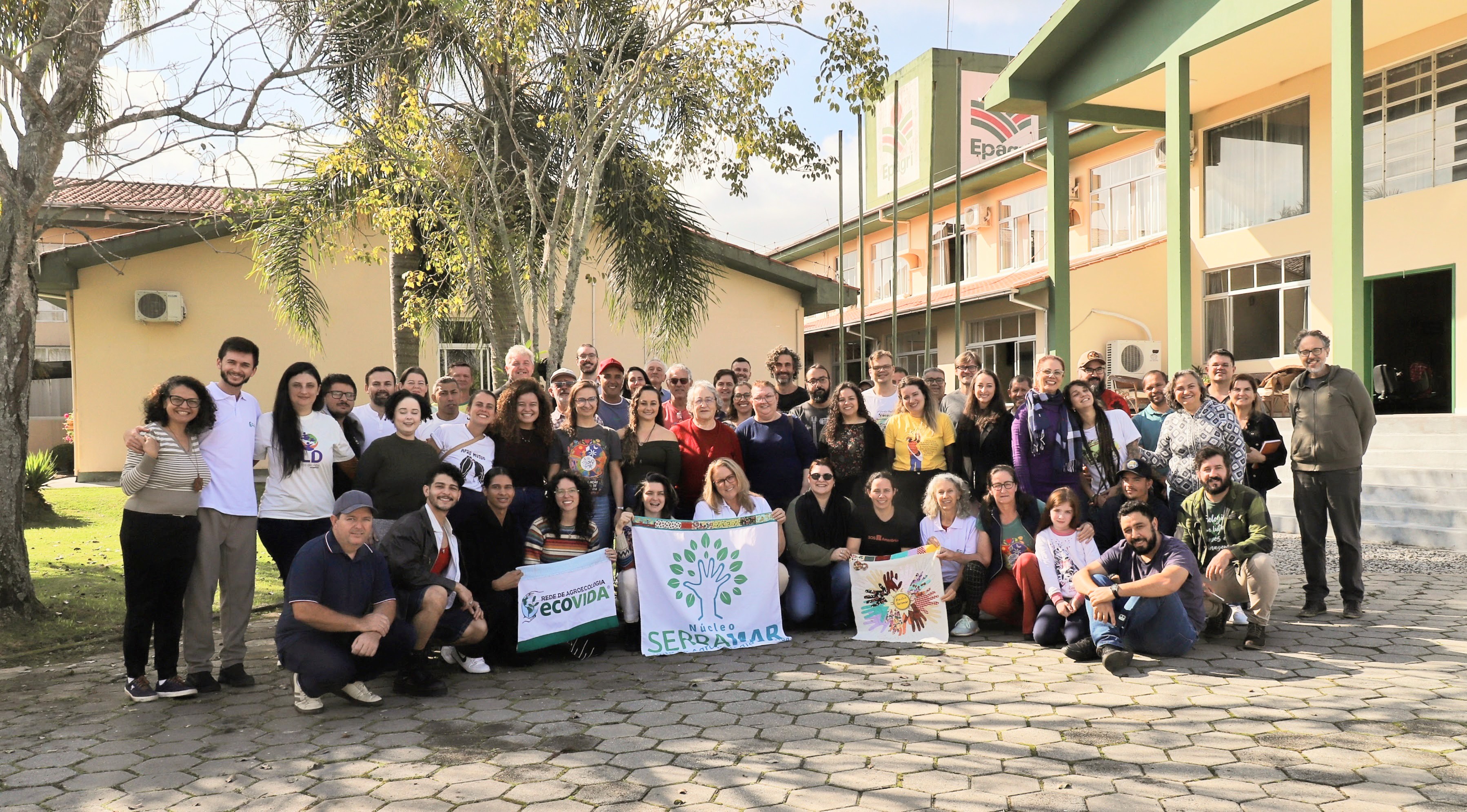
In early June 2026, we held our Launch Meeting for the Speco Demonstration Platform, in Tubarão/SC. Originally, the idea was to invite the Forum's PGSs to meet and discuss their hopes for the community's future. However, due to costs and the organizations' availability, we decided instead to bring together the people who work with Speco across Rede Ecovida's 34 nodes. The meeting then became a space for celebrating and sharing the journey of building the system. At this event, we had the partnership of Rede Ecovida's Coordination, given the Network's interest in this meeting, so we could come together, exchange ideas, clear up doubts and learn more about technology in agroecology. Also present was the coordinator of PGS ANC, Milene, who brought the experience of that other PGS and the wish to build a community around the system.
At the same time, we have been discussing with Conab a funding proposal for implementing Speco in other PGSs of the Forum, together with an API for transferring information to the Company. In this pilot project, we brought together 11 PGSs, of which 2 will continue with their own individual systems, and 9 will adopt Speco with support from Tekoporã. This direct contact with the PGSs allowed us to further strengthen this partnership between Tekoporã and the PGSs.
We realized that all this work has been carried out by people who believe in technology as a tool for sovereignty, just as they believe in agroecology as the path to producing healthy food and relationships. Being in the presence of all these people and this whole Network is something very powerful and remarkable. And in-person meetings, above all, feed that flame and keep it alive, because we understand that alone we get nowhere.
Working as a Network is like this: weaving the knots, forging partnerships and keeping it always strong so we can keep catching good fish.